



When parents tour nurseries, most of the attention goes to the classrooms — the numeracy corner, the art table, the reading nook. Outdoor play space is often glanced at last, treated as a nice-to-have rather than a core part of a child’s day. In practice, it’s one of the strongest indicators of how a nursery actually works, and how much room your child has to move, explore and build the physical skills that classroom time alone can’t cover.
This guide looks at why outdoor play space matters more than most parents expect, what a genuinely well-used outdoor area looks like, and what to ask about when you’re comparing nurseries in Sharjah.
What Does a Good Outdoor Play Space Actually Include?
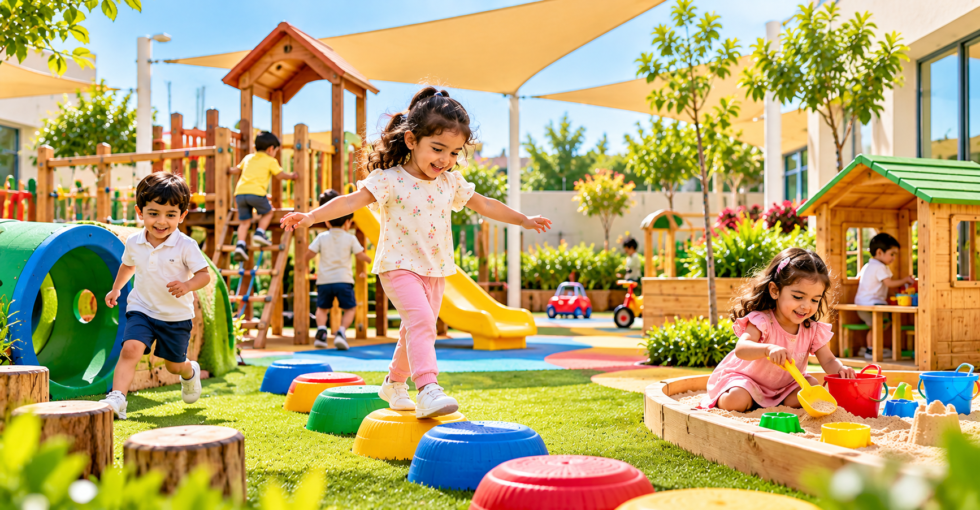
Outdoor play space isn’t just a yard with a slide. A well-designed area typically combines open ground for running and group games, equipment for climbing and balance, sand or water play for sensory exploration, and shaded zones that make outdoor time realistic even on hotter days. How these elements are balanced — and how consistently a nursery actually uses them — says a lot about its day-to-day approach to early years learning.
Why Sharjah’s Climate Shapes How Outdoor Space Is Used
Sharjah’s heat means outdoor play has to work around the climate rather than ignore it. Nurseries that take their outdoor play space seriously tend to schedule it for cooler parts of the day, provide shaded or covered areas for warmer months, and have a clear plan for moving activities indoors when temperatures make outdoor play impractical. Ask how a nursery handles this across the year — a thoughtful answer is usually a good sign that outdoor time is planned, not an afterthought.
Why Outdoor Play Space Matters for Early Development
Time outdoors does things that indoor activities, however well designed, can’t fully replace. Running, climbing and balancing build gross motor skills and coordination in a way that sitting at a table never will. Group games in open space teach children to negotiate, take turns and resolve small disagreements without an adult stepping in for every moment. Outdoor play space also gives children room to be loud, move freely and release energy — something that directly affects how settled and focused they are once they’re back indoors.
Physical Development and Motor Skills
Running across open ground, climbing low structures and balancing on uneven surfaces all challenge a child’s body differently than indoor furniture and flooring do. These are foundational movement patterns that support everything from handwriting grip to general coordination later on. The World Health Organization’s guidance on physical activity for young children points to regular active play throughout the day, and outdoor play space is usually where that happens most naturally.
Outdoor equipment also tends to encourage movements that indoor layouts simply can’t accommodate safely — climbing to a modest height, jumping from a low step, swinging, or pushing against resistance while running. None of this requires elaborate play structures; even a simple, well-used outdoor play space gives children daily practice at movements their bodies need to develop properly.
Social Skills Through Unstructured Play
Outdoor time tends to be less structured than a classroom activity, and that’s part of its value. Children negotiate who goes first on the slide, form their own small games, and learn to read other children’s cues without an adult directing every interaction. This kind of unstructured social practice is harder to recreate indoors, where space and noise limits naturally shape how freely children can play together.
Sensory Exploration and Curiosity
Sand, water, plants, shadows and natural textures all give children sensory input that a classroom simply can’t offer in the same way. A nursery with a genuinely engaging outdoor space uses these elements deliberately — sand and water play for sensory development, planting areas for early science curiosity — rather than leaving the yard as empty space between structured lessons.
This kind of exploration also feeds curiosity in ways that are harder to plan for indoors. A child noticing how shade moves across the yard through the morning, or how sand behaves differently when it’s wet, is building early observational habits that later support interest in science and the world around them. A well-thought-out outdoor play space treats these small, everyday discoveries as part of the curriculum, not as incidental play.
What to Look For in a Nursery’s Outdoor Play Space
Not all outdoor play space is used equally, even when two yards look similar on a tour. A few questions make it easier to judge what you’re actually looking at, rather than relying on first impressions from a single visit.
How Often Is Outdoor Time Actually Scheduled?
Ask how many times a day children go outside, and for how long. A nursery that treats outdoor play as a fixed, protected part of the daily schedule — rather than something that happens “if there’s time” — is generally more consistent about the benefits reaching every child, every day.
Is the Space Shaded and Usable Year-Round?
Given how hot Sharjah summers can get, ask specifically how the outdoor area is adapted for warmer months. Shaded structures, timing adjustments and a clear indoor alternative all matter more here than in cooler climates, and a nursery without a real answer to this may struggle to offer consistent outdoor time across the year.
Does the Equipment Match Different Age Groups?
Equipment suited for a four-year-old can be unsafe or simply unused by a toddler. Ask whether outdoor equipment and activities are adjusted by age group, rather than offering one setup for every child in the nursery.
How Little Feet Nursery Designs Its Outdoor Play Space
At Little Feet Nursery, outdoor play is built into the daily schedule rather than squeezed in when time allows. Our Montessori and EYFS-based curriculum treats physical, sensory and social development as equally important to classroom learning, and our outdoor play space is designed to support all three — with shaded zones, age-appropriate equipment and activities adjusted for Sharjah’s climate across the year.
This same approach applies across all three of our Sharjah branches — Al Khan, Al Khalidiya and Al Jazzat — though the exact layout and facilities can differ by branch depending on the space available. Outdoor play space is part of both our daycare and preschool programmes, so children get consistent time outside whichever schedule suits your family.
If you’d like to see our outdoor areas in person and ask how we schedule outdoor play across the day, our nursery admissions team is happy to arrange a tour.
Conclusion
Outdoor play space deserves more attention than it usually gets on a nursery tour. It shapes a child’s physical development, social skills and sensory exploration in ways that classroom time alone can’t fully replicate — and how consistently a nursery actually uses its outdoor area is often a better indicator of day-to-day quality than the equipment itself. When you’re comparing nurseries in Sharjah, ask specifically how often children go outside, how the space is adapted for the local climate, and whether activities are suited to your child’s age group.
If you’d like to see how we balance indoor learning with daily outdoor play, get in touch with our admissions team — we’re happy to show you around and talk through our daily schedule.
Frequently Asked Questions
Why does outdoor play space matter at a nursery?
Outdoor play supports physical development, social skills and sensory exploration in ways that indoor classroom activities can’t fully replace, and it gives children room to move freely and release energy.
How much outdoor time should a nursery schedule each day?
This varies by nursery, but outdoor play should be a consistent, protected part of the daily schedule rather than something offered only when time allows. Ask directly how many sessions are scheduled and for how long.
How do Sharjah nurseries manage outdoor play during hot weather?
Most nurseries adjust timing to cooler parts of the day, use shaded or covered outdoor areas, and move activities indoors when temperatures make outdoor play impractical.
Is outdoor play space equally important for toddlers and preschoolers?
Yes, though the equipment and activities should be adjusted by age group. Ask whether a nursery’s outdoor space and equipment are suited to your child’s specific age range.
What should I look for in a nursery’s outdoor play area?
Look for open space for movement, age-appropriate equipment, shaded areas suited to Sharjah’s climate, and a schedule that treats outdoor time as a consistent daily activity rather than an occasional extra.
Does outdoor play help with a child’s social development?
Yes. Unstructured outdoor play gives children room to negotiate turns, form their own games and practise social skills with less direct adult guidance than structured classroom activities.
Can outdoor play support school readiness?
Indirectly, yes. Physical coordination, independence and social skills developed through outdoor play all support the broader readiness skills children need as they move toward kindergarten.
Does Little Feet Nursery include outdoor play in its daily schedule?
Yes, outdoor play space is part of the daily schedule across all three of our branches, as part of both our daycare and preschool programmes.