


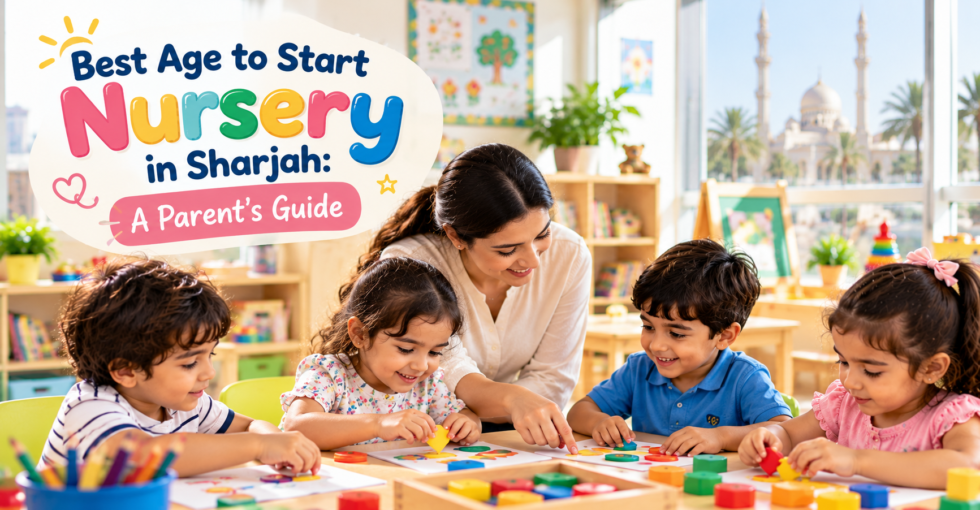

Deciding the best age to start nursery is one of the first real parenting decisions many families in Sharjah face, and it rarely has a single right answer. Some children thrive socially and emotionally from as young as eighteen months, while others benefit from a little more time at home before joining a structured group setting. This guide walks through what actually matters when weighing up timing, what to expect at each age, and how to tell whether your child — not just the calendar — is ready to begin.
Is There a “Right” Age to Start Nursery?
There isn’t one fixed answer, and that’s worth saying plainly before anything else. The best age to start nursery depends far more on a child’s individual development — their comfort with separation, their communication skills, their interest in other children — than on hitting a specific birthday. Most nurseries in Sharjah accept children from around eighteen months, with many families choosing to enrol somewhere between two and three years old, but the right moment for your own child is the one where they’re genuinely ready to benefit from it, not simply old enough to qualify.
Why Age Alone Isn’t the Full Picture
Two children born the same month can be at very different stages of readiness. One might separate from a parent calmly and dive straight into play, while the other needs extra reassurance and a slower introduction. Nursery staff who work with this age group every day are generally well placed to help you judge readiness alongside age, rather than relying on age as the only factor.
What to Expect at Different Ages
Understanding what a nursery day typically looks like at each stage can make the decision easier, and comparing these stages side by side is often the quickest way to narrow down the best age to start nursery for your own child.
18 Months to 2 Years
At this age, children are usually exploring sensory play, simple routines and early social interaction alongside peers, with a strong emphasis on comfort, consistency and individual attention from caregivers. Separation can take a little longer to settle at this age, so a gradual, patient settling-in process matters more here than at any other stage.
2 to 3 Years
This is when many children in Sharjah join nursery, often because they’re showing more independence, basic communication, and curiosity about playing alongside other children rather than just near them. Activities become more structured, with early language, motor skills and group routines building steadily through play-based learning.
3 to 4 Years
By this stage, most children are ready for a fuller nursery day, more structured group activities, and the early building blocks of a Pre-KG transition. Curriculum elements like Montessori practical life skills, EYFS-based learning areas and early literacy exposure typically become more prominent in daily routines.
Signs Your Child Is Ready for Nursery
Rather than focusing purely on age, these are the signs that often point to the best age to start nursery for your child specifically:
- Your child shows curiosity about other children, even if they don’t yet play cooperatively
- They can communicate basic needs, through words or gestures
- They manage brief periods of separation from you without becoming severely distressed
- They show interest in new environments rather than consistently avoiding them
- They’re developing a basic daily rhythm around naps, meals and play
No child needs to tick every box perfectly. These are indicators, not requirements, and a good nursery will work with you to ease any gaps gradually rather than expecting a fully “ready” child on day one.
Signs It Might Be Worth Waiting a Little Longer
On the other hand, some signs suggest that the best age to start nursery for your child might be a little later than you’d originally planned. Frequent, prolonged distress at separation that shows no sign of easing, significant difficulty with basic routines, or a child who seems overwhelmed rather than curious in group settings can all be reasons to wait a few more months. This isn’t a setback — children develop at different paces, and starting when your child is genuinely ready tends to lead to a smoother, more positive experience than starting early out of schedule pressure.
What Developmental Milestones Say About the Best Age to Start Nursery
Rather than relying on guesswork, it helps to look at general developmental milestones alongside your own observations. Toddlers typically begin showing more interest in peers, basic independence and early communication somewhere between eighteen months and three years, which is why this window tends to align with the best age to start nursery for most children. The CDC’s developmental milestones guide is a useful general reference for what to expect at each stage, though it’s worth remembering that milestones are a guide, not a strict checklist, and every child reaches them at their own pace.
What matters more than hitting a specific milestone on a specific date is the overall pattern — a child who is gradually becoming more curious, more communicative and more comfortable with brief separations is usually approaching a good moment to start, whatever their exact age happens to be.
Factors Beyond Age Worth Considering
A few practical factors often shape the decision alongside readiness itself.
Family Routine and Childcare Needs
For many working families in Sharjah, nursery timing is also tied to childcare logistics, which can shift what the best age to start nursery looks like in practice. If you need consistent daycare coverage, starting a little earlier with a nursery that offers strong individual attention for younger children can work well, provided the settling-in process is handled gradually rather than rushed to fit a work schedule.
It’s worth being honest with yourself about this trade-off. Starting earlier than you’d ideally choose, purely out of necessity, isn’t a problem as long as the nursery you pick is genuinely set up to support younger children with patience, rather than simply accommodating them as a formality.
Siblings and Social Exposure
Children with older siblings already in a nursery or school environment sometimes adjust faster, having already picked up some social cues and daily structure by example. An only child with limited exposure to peers may simply need a slightly longer settling-in period, not a later start date.
Curriculum and Long-Term Learning Path
It’s worth thinking about the best age to start nursery in terms of the full learning journey, not just the first day. A Montessori, EYFS and STEAM-based curriculum will carry your child smoothly from nursery through to Pre-KG. Starting at a nursery that offers a consistent educational approach across these stages can make later transitions, including the move into preschool, noticeably smoother.
How to Make the Transition Easier, Whatever Age You Choose
Once you’ve settled on what feels like the best age to start nursery for your family, a few simple steps tend to make the actual transition easier:
- Visit the nursery together before the first official day, so the environment feels familiar
- Keep goodbyes brief and confident rather than drawn out, even if it feels difficult in the moment
- Maintain consistent routines at home in the weeks around starting
- Talk about nursery positively and simply in the days leading up to it
- Expect a short settling-in period, and communicate openly with staff about how it’s going
How Little Feet Nursery Supports Children at Every Starting Age
At Little Feet Nursery, we welcome children from eighteen months through our daycare and preschool programmes, with a settling-in approach designed around each child’s own pace rather than a fixed timeline. Our Montessori-trained, SPEA-certified teachers get to know every child individually, so whether your little one is starting at eighteen months or closer to three years old, the transition is handled with patience and real attention — consistently across our Al Khan, Al Khalidiya and Al Jazzat branches.
If you’re still weighing up timing, our admissions team is happy to talk through where your child is developmentally and what starting age might suit them best.
Conclusion
There’s no universal best age to start nursery — only the age that’s right for your own child, based on their comfort with separation, communication and curiosity about the world around them. Whether that’s eighteen months or closer to three years old, what matters most is a gradual, supportive introduction and a nursery that adapts to your child’s pace rather than the other way round.
If you’d like help thinking through the right timing for your child, get in touch with our admissions team — we’re happy to talk it through and arrange a visit.
Frequently Asked Questions
What is the best age to start nursery in Sharjah?
Most nurseries accept children from around eighteen months, with many families enrolling between two and three years old. The right age depends more on your child’s individual readiness than on a fixed number.
Is 18 months too young to start nursery?
Not necessarily. Many children settle well at this age with a gradual, patient introduction and plenty of individual attention from caregivers during the early weeks.
What are the signs my child is ready for nursery?
Curiosity about other children, basic communication of needs, manageable separation from parents, and a developing daily routine around naps and meals are all positive signs.
Should I wait if my child struggles with separation anxiety?
Not always. Some separation anxiety is normal and often improves with a gradual settling-in process. Persistent, severe distress that doesn’t ease over several weeks may be a sign to wait a little longer.
Does starting nursery later put my child behind?
No. Children develop at different paces, and starting when a child is genuinely ready generally leads to a smoother experience than starting earlier due to scheduling pressure alone.
How long does it usually take a child to settle into nursery?
This varies by child, but a short settling-in period of a few days to a couple of weeks is common, particularly for younger starters. Open communication with staff during this time helps considerably.
Does having older siblings affect when a child should start nursery?
It can help. Children who’ve already seen a sibling’s daily routine and social environment sometimes adjust a little faster, though this varies from child to child.
How does Little Feet Nursery support children starting at different ages?
Our Montessori-trained teachers tailor the settling-in process to each child’s own pace, whether they’re joining us at eighteen months or closer to three years old, across all three of our branches.