



There’s this moment maybe you’ve had it when you pick up your child from nursery and they come running out saying some random word in French or describing a butterfly’s life cycle with the confidence of a BBC narrator. And you think, where did that come from?
It came from the environment. From small, consistent moments of guided learning. And here’s the thing most parents don’t realise: that same magic doesn’t have to stop at the nursery gate.
Supporting your child’s learning at home doesn’t mean drilling flashcards at the kitchen table or scheduling “educational time” into a Google Calendar. It’s actually a lot more relaxed than that. And a lot more effective.
Start With What They’re Already Curious About
Kids are naturally curious. Brutally, endlessly, exhaustingly curious. Instead of fighting that energy or trying to redirect it into something “educational,” follow it.
If your three-year-old is obsessed with dinosaurs right now lean in. Count dinosaurs. Sort them by size. Draw them. Make up silly stories where the T-Rex can’t reach the top shelf. You’re covering maths, language, creativity and fine motor skills, and they have no idea it’s “learning.”
This is called interest-led learning, and early childhood educators swear by it. When a child is genuinely engaged, their brain retains information significantly better. It’s not a theory it’s backed by decades of developmental research.
Talk More. Screen Less. (Even a Little Helps)
This one’s controversial, so let’s be honest about it. Screen time isn’t the devil. But the quality of language your child hears every day shapes their vocabulary, comprehension and communication skills more than almost anything else.
Researchers call it “serve and return” interaction you say something, they respond, you respond back. Back and forth, like a tennis rally. These moments literally build neural pathways. And the best part? They happen during the most mundane activities.
Narrate while you cook. “We’re going to peel the carrots now. Can you count them? One… two…” Ask real questions during bath time. “What was the best bit of your day? What was hard?” These conversations even with a toddler who gives you a three-word answer — matter enormously.
Build a Small “Yes Space” at Home
You don’t need a separate playroom or expensive wooden toys from Scandinavia. A single low shelf with rotating activities does the trick. The idea is to create a space where your child can access things independently and make their own choices.
This supports what early years educators call “self-directed play” and it’s one of the most powerful tools for developing problem-solving, creativity and emotional regulation.
Rotate items every week or two so things stay fresh. Include a mix: something for building, something for creating, something for pretend play, and something that involves a little challenge (puzzles, sorting trays, threading beads). Don’t overthink it. A cardboard box and some old magazines can spark thirty minutes of genuine learning.
Read Together — But Make It a Conversation
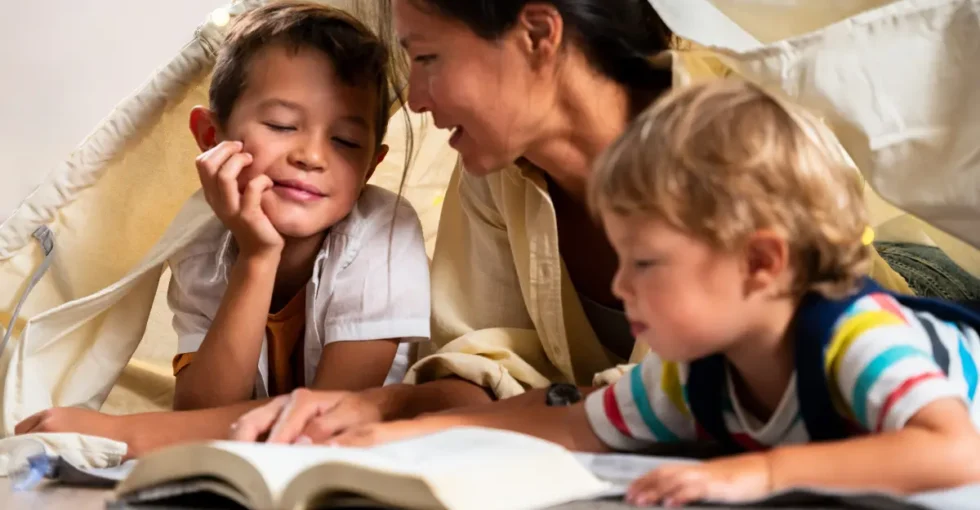
Reading aloud to children is probably the single most impactful thing a parent can do for early literacy. We all know this. But how you read matters just as much as whether you read.
Don’t just recite the words. Pause. Point at pictures. Ask “what do you think is going to happen next?” Let them turn the page. Laugh at the funny bits together. Re-read the same book fifteen times if that’s what they want repetition is how young children consolidate language.
Bedtime reading isn’t just cosy. It’s the foundation of everything that comes later: reading comprehension, writing, critical thinking, empathy.
Don’t Underestimate Play
Let’s be really clear about this: play is learning for young children. Full stop. Unstructured outdoor play, messy sensory play, imaginative play with dolls or cars or sticks all of it develops the whole child.
When your child is playing “shops” with cushions and imaginary money, they’re practicing math, social negotiation, language and creativity simultaneously. When they’re digging in the garden, they’re developing fine motor skills, scientific thinking and a relationship with the natural world.
The best nurseries understand that learning through play isn’t a compromise on academics it’s the foundation of them. And you can carry that philosophy home with you.
A Few Practical Ideas to Start This Week
- Bake something together and let them measure the ingredients
- Go on a “nature walk” with a bag for collecting interesting things
- Set up a simple sorting activity (buttons, socks, fruit anything works)
- Tell a story together where they make up the next part
- Let them “help” with real tasks (stirring, watering plants, folding)
None of this requires a teaching degree. It just requires presence and a willingness to follow their lead.
The truth is, supporting learning at home isn’t about adding pressure to an already busy family life. It’s about weaving small, meaningful moments into the day you’re already having. Little feet are always moving all you have to do is walk beside them.