


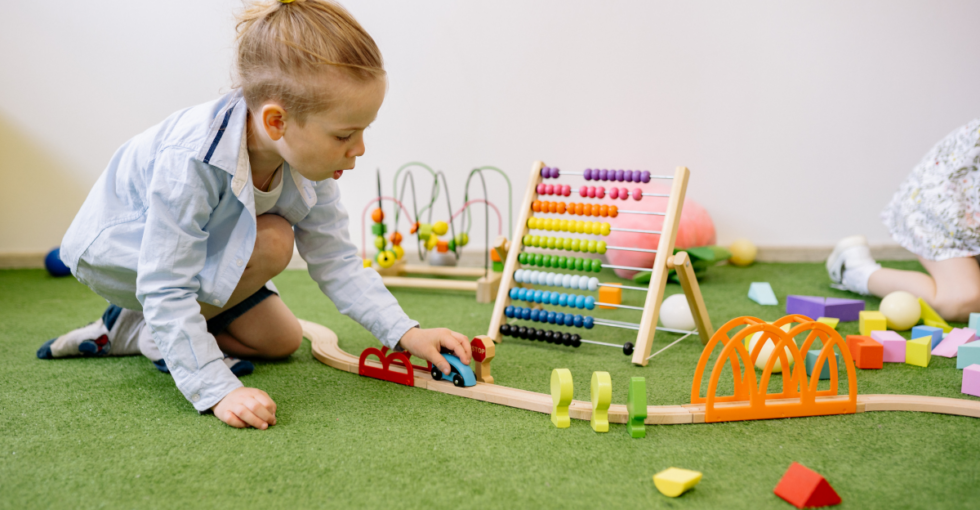

Montessori education is centered on independence, purposeful activity, and respect for a child’s natural development. Instead of viewing toys as entertainment, the Montessori approach treats them as tools that support concentration, coordination, and cognitive growth. Children engage with materials at their own pace, guided by intrinsic motivation rather than external reward systems.
Table of Contents
For parents in Sharjah, this approach aligns well with structured home environments and indoor-oriented lifestyles. With much of the day spent indoors due to climate conditions, selecting appropriate developmental materials becomes particularly relevant in shaping how children interact with their surroundings.
How to Choose Montessori Toys
Montessori-aligned materials are typically simple, functional, and designed with a clear developmental purpose. The emphasis is on quality rather than quantity. Natural materials such as wood, cotton, and metal are preferred because they provide tactile consistency and reduce overstimulation. Toys should reflect real-world objects rather than fictional or overly stylized items. This helps children build a connection between play and practical life skills. Visual and auditory distractions such as flashing lights or excessive sounds are generally avoided, as they can interfere with concentration.
Proportional sizing, safety, and durability are also critical considerations. Materials should be accessible to the child, stored in an organized manner, and easy to use independently. Observation of the child’s interests and developmental stage should guide selection rather than relying solely on age labels.
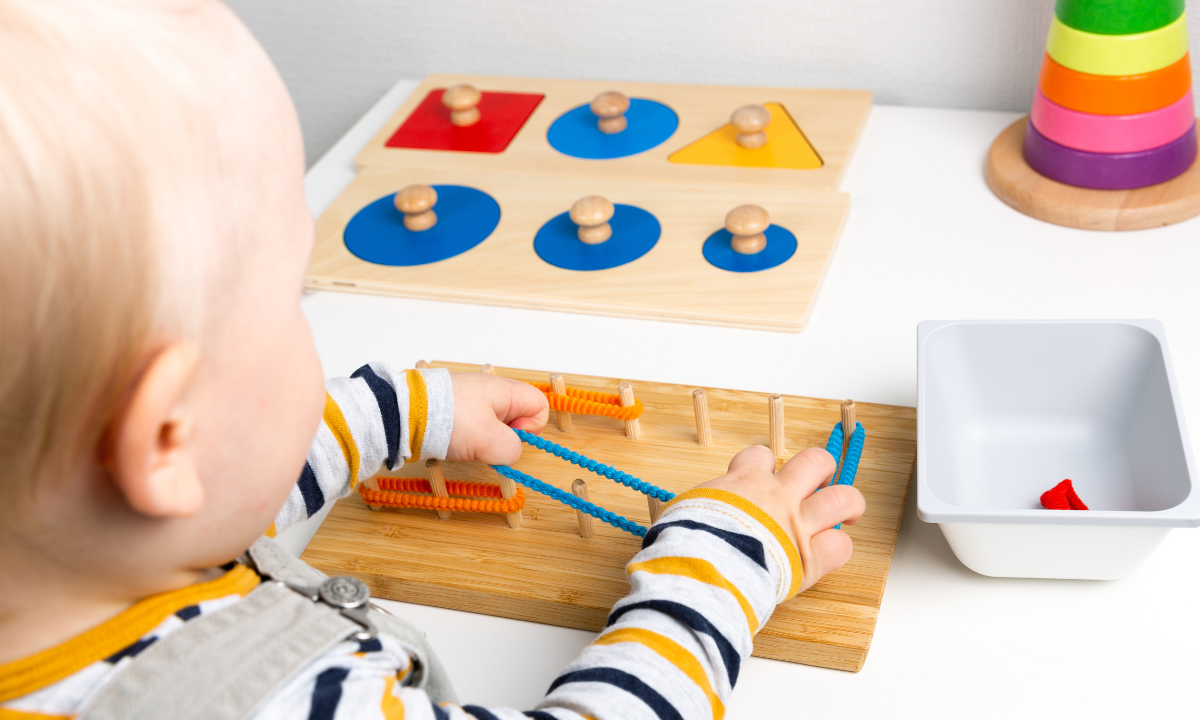
0–6 Months: Sensory Exploration and Visual Tracking
At this stage, development focuses on sensory awareness and early motor responses. Infants begin to track objects visually, respond to contrast, and develop basic grasp reflexes.
Appropriate materials include high-contrast visual cards, simple hanging mobiles, soft rattles, grasping rings, and unbreakable mirrors. These items support visual tracking, auditory awareness, and early hand coordination.
The environment should be calm and uncluttered, with safe floor space for supervised movement. In Sharjah households, maintaining a cool, quiet indoor setting is typically necessary to support comfortable exploration.
6–12 Months: Grasping, Reaching, and Cause-Effect Understanding
During this period, infants begin to develop intentional movement. Crawling, reaching, and object manipulation become more coordinated. The concept of cause and effect also starts to emerge.
Recommended materials include stacking rings, nesting cups, textured balls, and object permanence boxes. These tools encourage repetitive action, helping the child understand that objects continue to exist even when out of sight.
Activities that promote movement, such as crawling across safe floor areas or pulling up on stable furniture, contribute to gross motor development. Safety measures such as secured furniture and clear pathways are essential in home environments.
12–18 Months: Early Walking and Practical Exploration
Toddlers in this range are refining balance and mobility. They are also highly engaged in imitation and begin to mimic everyday activities.
Suitable materials include push walkers, simple wooden puzzles with knobs, shape sorters, and child-sized practical tools such as miniature cleaning or kitchen items designed for safe use. These materials encourage coordination and early responsibility through imitation of real-life tasks.
Accessible storage and clearly defined play areas allow the child to move independently between activities. This supports both physical development and emerging autonomy.
18–24 Months: Language Growth and Fine Motor Skills
Language acquisition accelerates significantly during this stage. Children begin to label objects, follow simple instructions, and express preferences.
Materials that support this phase include matching cards, simple sorting sets, stacking toys, and threading activities under supervision. These activities strengthen fine motor control while reinforcing cognitive categorization.
Parents can support development by naming objects during interaction and encouraging repetition. The goal is to integrate language naturally into daily play rather than relying on formal instruction.
2–3 Years: Independent Activity and Problem Solving
Children at this stage show increased independence and are capable of engaging in activities for longer periods. They begin to understand sequences and can follow multi-step tasks.
Recommended materials include multi-piece puzzles, basic construction sets, practical life tools, and matching or sorting games. Role-based activities that reflect real-world functions are particularly effective.
The focus shifts toward sustained concentration and problem-solving. Children benefit from environments that allow them to initiate, complete, and repeat tasks without interruption.
3–4 Years: Imaginative Structuring with Real-World Anchors
Imagination becomes more structured and intentional. Children begin to engage in symbolic play while still benefiting from materials grounded in reality.
Appropriate resources include alphabet materials, early counting tools such as beads, pattern blocks, and role-based play items that reflect real environments such as homes or community settings. Activities that involve classification, sequencing, and pattern recognition are also relevant.
At this stage, children can follow structured routines and benefit from organized learning spaces that separate different types of activities.
4–6 Years: Cognitive Expansion and Skill Refinement
This stage involves more advanced cognitive processing, including early literacy, numeracy, and logical reasoning. Children are capable of handling more complex tasks and working independently for longer durations.
Materials may include advanced puzzles, phonics tools, math manipulatives, geography-based materials, and classification systems. These resources support abstract thinking and reinforce foundational academic skills.
Children begin to connect concepts across different domains, applying learned skills to new contexts. Structured activities combined with self-directed exploration are both important.
Setting Up a Montessori-Friendly Environment at Home
A well-organized environment supports independent learning. Low shelves allow children to access materials without assistance. Storage should be minimal and categorized to avoid overwhelming choices.
Rotating toys periodically maintains engagement and prevents overstimulation. Each item should have a defined place, encouraging the child to return materials after use. Child-sized furniture and clearly designated activity areas further reinforce independence.
Consistency in layout and organization helps children develop internal order, which is a core principle in Montessori environments.
Common Mistakes to Avoid
One frequent issue is providing too many materials at once, which can reduce focus and lead to superficial engagement. Another is selecting toys that prioritize entertainment over developmental value, such as those with excessive sensory features.
Introducing materials that are too advanced or too simplistic for the child’s current stage can also limit effectiveness. Over-involvement during independent activities may interrupt concentration and reduce the child’s confidence.
Aligning Montessori Practices with Sharjah Lifestyle Context
Households in Sharjah often operate within indoor environments due to climate conditions. This makes indoor play areas and structured home setups particularly relevant for developmental activities.
Family-oriented routines and cultural emphasis on early education support the integration of Montessori principles. Balancing screen exposure with hands-on activities is also an important consideration, as tactile engagement plays a key role in early development.
Access to early learning institutions that follow structured methodologies can complement home-based practices and provide additional social and educational interaction.
Conclusion
Montessori-aligned toy selection is not about accumulation but about intentional choices that correspond to developmental needs. Each stage of early childhood introduces different cognitive, motor, and sensory requirements, and materials should evolve accordingly.